Interfaces that feel fast, not just look fast
Technical speed is measurable, but people remember whether an interface felt fast. Notes on stable layouts, early feedback, and an honest performance budget.
I can measure how many milliseconds a page takes to load, but that is not the question a person is really asking. If content shifts around as the page appears, or a button stays silent after I press it, technical speed no longer feels fast. Perceived performance is usually less about disguising a wait and more about making the state of the interface clear.
People experience a sequence, not a score
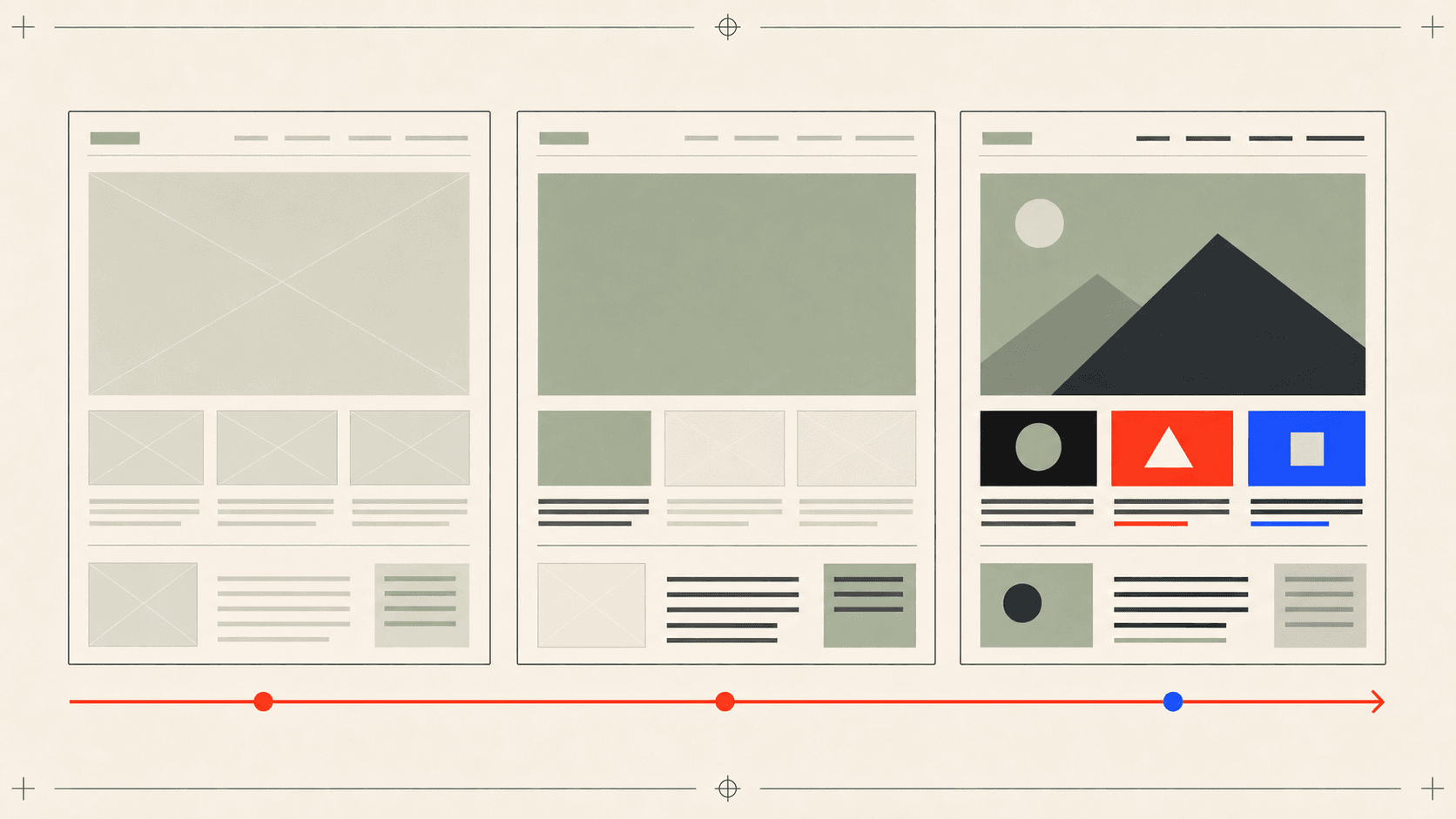
Performance reports are a useful starting point, but nobody sees a score while using a product. They experience an order of events: the frame of the page, the primary content, and then the details. When that sequence is deliberate, the screen feels usable before it is fully complete. When it is not, every new element disrupts the previous one and the eye has to find its place again.
That is why I reserve space before content arrives. The aspect ratio of a cover, the line length of a heading, and the height of a card are as predictable as I can make them. Keeping that space stable during loading is not just an optimisation; it is the page keeping the promise it made in its first frame.
When an action begins
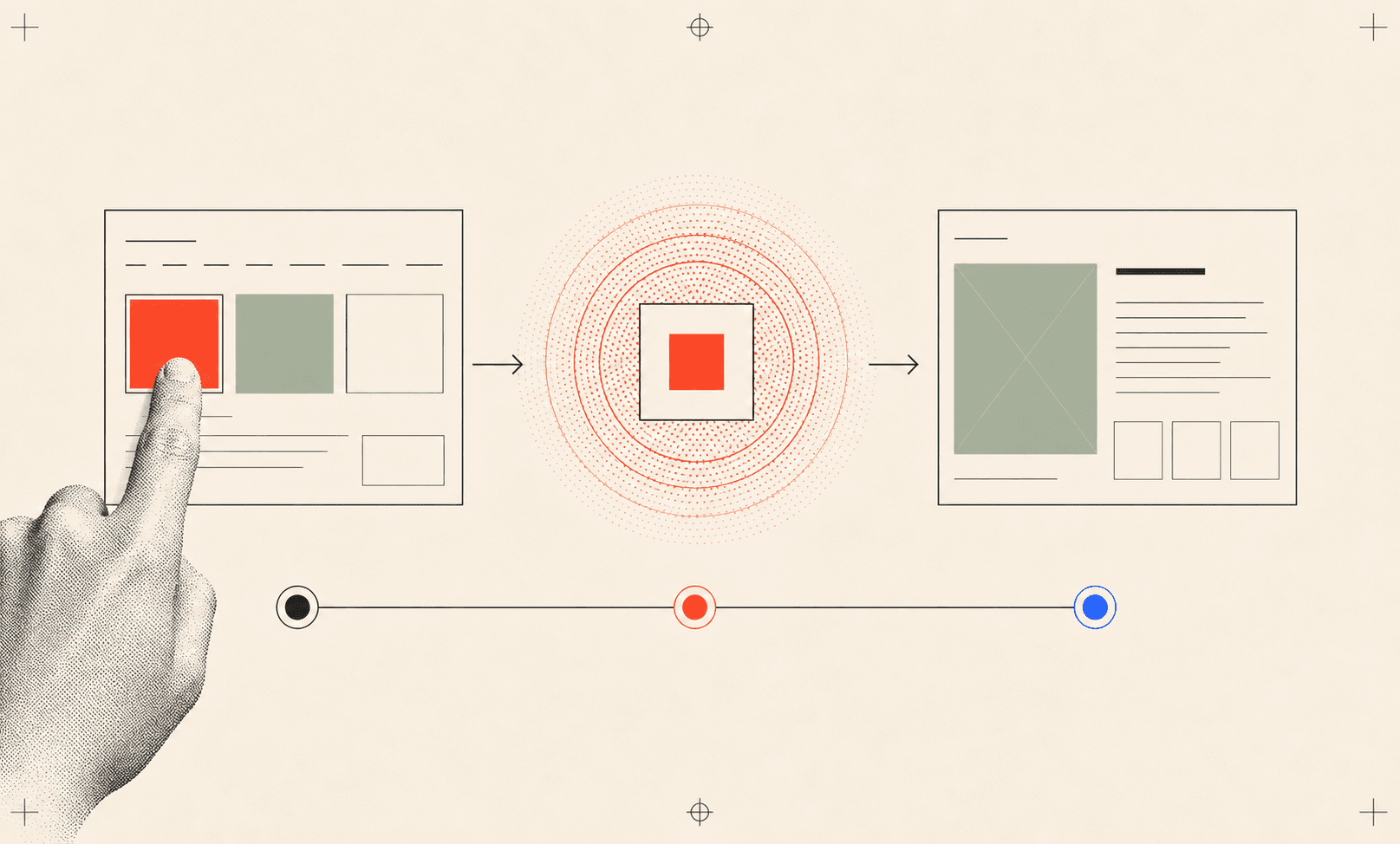
Once someone starts an action, the interface does not need to finish it instantly. Its first job is to acknowledge the request. The button can change state, the selected row can become distinct, or the space for the next panel can be prepared. Small, immediate feedback can make even a longer operation understandable.
I am not trying to manufacture false speed here; I am making the real state visible. If work is still in progress, I do not pretend it is done. I design an intermediate state that says what started and what comes next. Good feedback may not shorten the operation, but it prevents repeated clicks and the uncertainty that the system has failed.
The fastest resource is the one never loaded
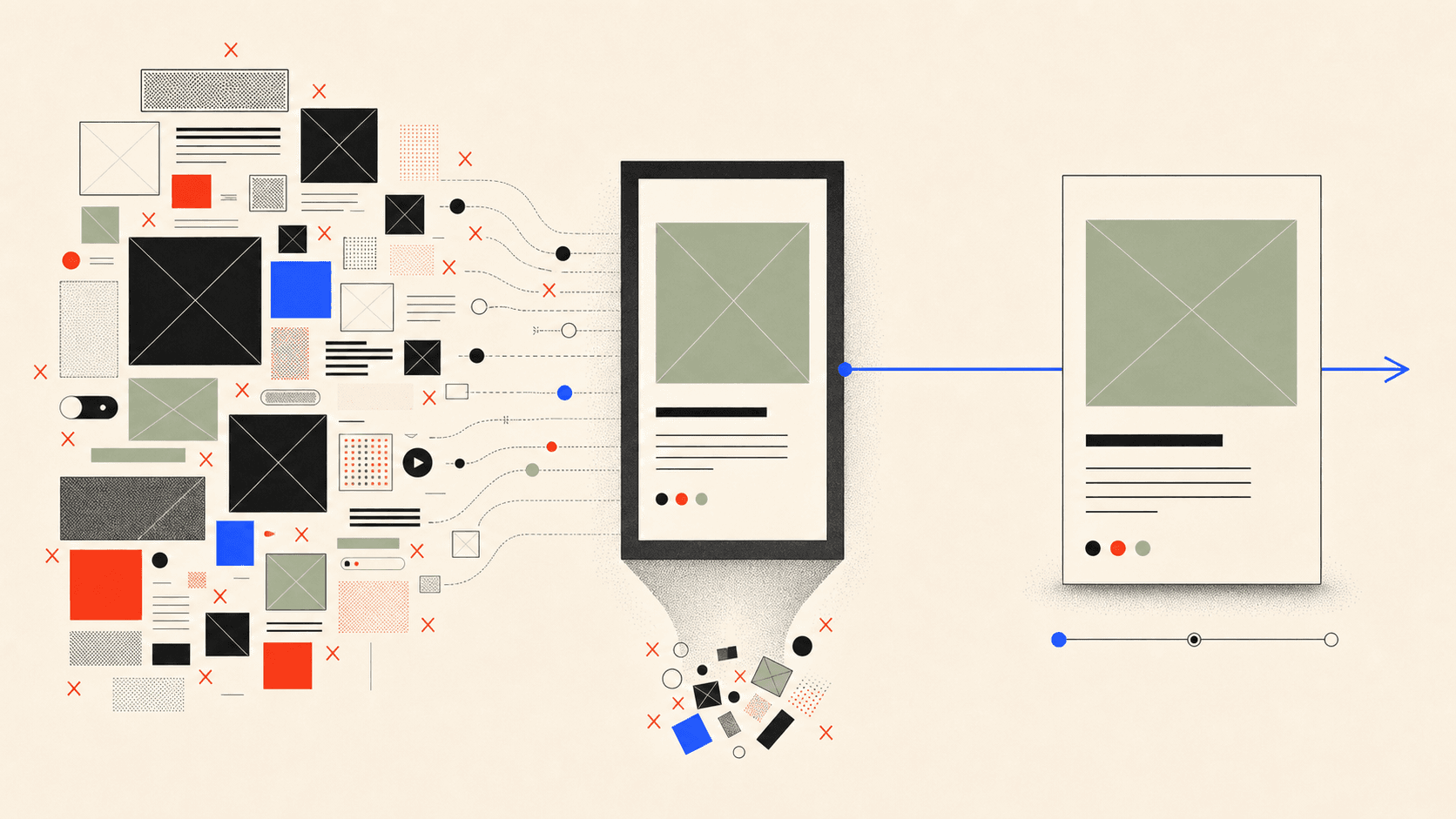
The most effective performance work often begins by removing something: an unused font weight, an oversized image below the fold, an entire library for one effect, or repeated third-party code. Each one is an invisible weight the page has to carry. I use a performance budget to question those costs from the beginning, not just to clean them up later.
File size is only one part of the cost. A resource has to travel over the network, decode, execute, and take its place on screen. I therefore prefer a lean structure that prioritises critical content, serves images at their real display size, and sends client-side code only where interaction truly requires it.
Measurement needs context
The final step is measurement, but a result from one powerful computer on a fast connection is not enough. A narrow screen, slower network, cold cache, or modest processor exposes different problems. Lab measurements make comparisons possible; real use reveals which delays people actually feel.
An interface that feels fast does not come from a single optimisation. Stable layout, early feedback, sensible resource order, and restrained dependencies have to work together. Performance then stops being a score collected at the end and becomes a quality shared by every design decision.